



Episode 239: Navigating the Challenges of Curriculum Implementation
Our trio are joined this week by experienced educator, Jerry Mussio, from British Columbia. We’re discussing the historical context of curriculum implementation, the challenges faced by teachers, and the role of policymakers in shaping education. What are the systematic issues within educational frameworks? Is more support needed for teachers in effectively implementing curriculum changes? Plus, Jerry emphasises the necessity of returning to real-world experiences in policy-making and the influence of external agencies on curriculum development.
More Podcasts on Education
Continue listening to our educational experts
This is The School of School podcast
Listen on Apple Podcasts, Spotify or wherever you find your podcasts.


Meet your instructors
The school of school podcast is presented by:
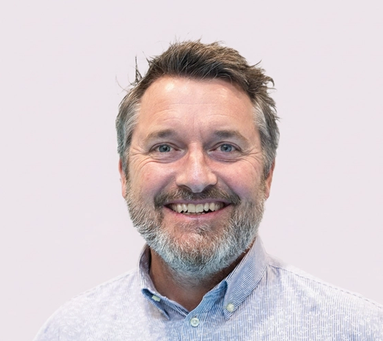
Adam Gifford

Andy Psarianos

Robin Potter
Special guest instructor

Jerry Mussio
Never miss an episode
Subscribe to get the latest The School of School podcasts delivered to your inbox.
Podcast Transcription
Adam Gifford
Welcome back to another episode of the School of School podcast. Andy and Robin are with us today. How are doing both?
Andy Psarianos
Hey, doing well.
Robin Potter
Very good. Yeah.
Adam Gifford
You're good. Excellent news. I'm really pleased to say that we've got Jerry Mussio here from British Columbia. Jerry, you've got an extensive back catalogue when it comes to education. I wonder for listeners that may not have met you at this stage, if you could just tell us a little bit about yourself and sort of, you know, bring us up to where you are now.
Jerry Mussio
Great, very quickly, thank you for having me, by the way. So I grew up in British Columbia, did my undergrad studies in the United States and then grad studies at the University of Toronto. And since that time, spent about 25, almost 30 years working at the senior level in the Ministry of Education in British Columbia.
And following that, was seconded to Statistics Canada. And during that period, was Canada's representative to the OECD and the overall design of the Program for International Student Assessment. I've had, I guess, lot of experiences in the province dealing with the design and implementation of curriculum and also the design of province-wide testing programs and examinations. many of those experiences I brought into a lot of the work I've done internationally with a number of countries. Yeah, so that brings me to here.
Adam Gifford
We've been talking as a group and one of the things that you were talking about was this sort of what happens, I guess, in curriculum and implementation and the impact that that has on systems, schooling systems. we're sort of talking about you went back quite a way just to use British Columbia as an example. I just want to sort of unpick that a little bit more about that thinking around curriculum implementation, where it works well, where it doesn't work so well, and what you've seen in what is an extensive, really high-level career in education.
Jerry Mussio
When I joined the Ministry of Education, this is in the early 70s, there was a history there of one or two people, say in the curriculum area, being responsible for curriculum. And they in turn would second teachers from the system to come in and work with the ministry and curriculum for two or three year period. And then they'd go back to their schools. And when I arrived, I built on that tradition and found that it was, I think an excellent model because we were getting up to date experiences from people who are actually teaching in schools or coordinating curriculum in school districts. We were getting that. And of course, at the same time, there'd be new initiatives by governments and curriculums and so on that would come along, but they would always be flow through those committees and those people who had a good understanding of what happened in classrooms. Now in recent years, the ministry has drifted away from that model and have adopted more a model that consists of permanent staff in the Ministry of Education.
And I mean, these are all very good people. I don't mean to criticize, but I think what has been lost is that rotation from what I call the real world, the classroom into the policy arena and helping inform that policy arena that made, I believe, a huge difference. And it's something that I believe the ministry here needs to return to.
Robin Potter
So yeah, my question from this discussion just keeps coming back to you because you've talked a lot about how implementation is kind of the missing piece here. We've got policymakers, we've got government who have these great suggestions and ideas and here's the new curriculum and somewhere it falls off now from there and...
What's step number one, do you think, to bring this together so that the implementation of it is going to work or be effective for the students?
Jerry Mussio
Well, just perhaps we're into another cycle where, you know, like the example that I think Adam gave where, you know, memorizing timetables is the big priority now or whatever. you know, where missions are taking politically that say don't work out, then often people do come back to a more meaningful and realistic approach. so, I don't know. I know that in terms of government agencies, in my experience, say across Canada, there's been a drift away from... If you're working in the, I don't know, forestry sector, that historically there were a lot of people who were experienced in working in the forestry industry in British Columbia or in the mining industry, those would be part of the expertise in government. But it seems that we've moved away from that model to having people who are very good managers, policy analysts and so on, and where specific expertise is needed, that expertise would be gained through contracts, right? Where bring people from the outside in to do that work. And so, this model that says, we'll define the objectives for the system and it's up to you to implement. And then what we will do is simply collect information to monitor how things are going. So we will manage by setting direction and monitoring results. And in terms of implementation, it's your job out there to take that policy and translate it into reality. I think that's been across government agencies across Canada. And think probably other countries too.
Andy Psarianos
I think it's very common in many countries, especially where education is very political in nature. it's driven by, you know, the policies are driven by, I suppose, a perceived problem that needs to be solved. you know, results are dropping or, you know, and, some, sometimes maybe more often than any of us would like to admit a lot of these things are also formulated from people's opinions. So, you know, so what, what can happen and we're not talking about any particular places here, but, but it can happen in many places is that you have highly influential people with strong opinions. can think of some neighbors that we have that maybe you could look at, know, and they're very opinionated and they, and they, and they're very powerful and they implement change and at a policy level without really knowing what the effects of that are going to be. the, that's one problem. The other issue is that, you know, and it's being done for political reasons. So this is to get the votes. So that's where you get these big sweeping statements. Like we got to get back. We got to get back to basics. Right. Well, what does, what does that mean? Like what, does that mean in the context of teaching, let's say a subject, you know, haven't we been trying to do that all along? It's just a very, but you know, it's kind of like saying, well, I was taught this way and clearly I'm really smart. So everyone should be taught this way, you know, and you get these kinds of, this does happen and it's kind of unfortunate. So that's on the policy level problematic now on the curriculum level, you know, there's actually not that much difference between all the curriculums. If you go through any sort of OECD country, that's, you know, let's see, if you compare any provinces curriculum to, let's say England, or, you you mentioned Estonia or whatever it is, Finland, whatever, there's not really that much difference between the curriculums. They're all aiming to do the same thing, which is to, you know, teach people to be valuable members of society in tomorrow's world. They're all trying to do the same thing and the subject matter is not all that different. Where you see huge differences from there, how is that then implemented into the school system and what support to the schools? What does the system look like? What and and does it work together or is it a bit separated. So when you look at the best performing nations, you'll see some massive consistency in how the execution of education is done. While when you look at countries, other countries that are not, let's say, at that, you'll see a huge variance in decentralized or absolute control, whatever it is. And we know that both those systems don't really work, right?
You need a working system, I guess is what I'm saying. It's a systematic problem. When education is dropping, it's not the curriculum. And it's not, you can't blame the teachers and you can't blame the teaching union. You can't blame the ministry of education or even the minister of education or even the prime minister. It's not their fault. It's the system's not working. Right. And that's what we tend to ignore because we kind of pass the buck. Like you said, this is sort of like, we've, we've created this really beautiful document here that says everything you should do in order to succeed. Good luck with that off you go. Right. And it doesn't work that way. I love the mechanic analogy you gave, you know, it's kind of, it's kind of crazy. It's like, kind of like, imagine you're building, you're trying to build a rocket and you just hire an engineer and say, 'Thanks for joining us. Now go build a rocket. Talk to you, talk to you in two years time when the rocket's done', you know.
Jerry Mussio
Right.
Exactly.
Robin Potter
Yeah, yeah. Well, that's my question, Jerry, is again, going back to, let's go back into the classroom here and the teachers, mean, yeah, okay, here's the curriculum. Good luck. See you at the end of the year, you know, and I think a lot of teachers are... flailing around trying to figure out what resources can I use? Where do I get this from? You know, they're giving maybe a few book suggestions, maybe some old, I don't know, photocopies from someone who's already taught the class, but they're basically being told to build a rocket that they don't know how to build.
Jerry Mussio
The other challenge, we talk about coherence, the other major challenge that I've talked about and written a paper op-ed with a colleague of mine, Charles Ungerleiter, who's, he was actually former deputy minister and also he was a, professor at University of British Columbia. Anyways, the issue of our legislation in the province. So at the highest level, we have a mission statement for the school system, which focuses on student learning and preparing kids for being contributing members of society, economy, and so on. And we got three clear goals for the education system, intellectual development being the prime responsibility of the school system. But we have two other goals to be worked on by schools in collaboration with parents and society broadly. And that is the personal social development children and thirdly, preparing them for careers and the workplace. It's very clear. Then you look at the actual legislation for the Kindergarten and Grade 12 school system is called the School Act. And that lays out all of the rights and the responsibilities and administrative requirements of the system. And the focus of that act is on the administration of the school system. Anything to do with student learning, is clustered under the general responsibilities of the Minister of Education. So you've got statements in the act that would include things like, if the secretary treasurer is unable to make a meeting of the school board, the school board may authorize another person to sit in his place. Words to that effect. And so the motivation at the administrative level, the superintendents of schools, principals, and so on, is to make sure they're adhering to the administrative requirements of the act. So anything to do with student learning sort of appears, if you look at it historically, like randomly, a minister may be interested in particular issue, maybe interested in mathematics. Okay, we're gonna have a math initiative. Another minister may come along and say, well, no, we're gonna quit math, we're gonna do history. And so it's sort of quite a haphazard in terms of the discussions and focus around student learning. And I looked at the health system in the province. There's several acts of governing the health system in British Columbia. There's a health act, or sorry, a hospitals act that focuses on the administration of the health system. Then they have another act called the Health Act. And that focuses on the health of the people of British Columbia. So that's where out of that, you get local health agencies producing routine reports on the the measles outbreak percentage of children who may be in intensive care. We've got all this data focusing on the health of the schools of the of the of our health system, the health of the BC population and in the province.
And so there lot of discussions about like during COVID and so on about people who are struggling and vaccines and so on. What do we get in education? Well, yesterday I was reading the paper. The teachers union and teachers. And also our school trustees or local level are clamoring because there's not enough money in the system.
So, and that's not unusual. So headlines are about funding, conflict around the union and government agencies. About two months ago, a school board was dismissed because they weren't meeting financial requirements. There's very little discussion about student learning unless until say it PISA results that came out very positive, maybe a positive headline about how well kids are doing. But when we get say any declines that information sort of gets massaged by government and really doesn't get highlighted. So in terms of our legal legislative or legal framework, there's real lack of coherence there. It's not focused on student learning. So that's another issue.
Adam Gifford
I find, I find, find like what you say, I find utterly fascinating and, and in part there's, a part in it that I also find infuriating education. And I think this is, I think this is true of many countries where that approach, that administrative approach, because that's, if you like, easier. You know, have you met these guidelines and these sorts of things? The difference in medicine for me, in the example that you used, is that if there was an initiative and me was outbreak or whatever, one of the things that medicine would do, I'm sure, is they'd say, we need to provide training for all nurses or doctors in order to administer this course of action, and they would be up-skilled on what they're looking for to interpret the data, to make sure that they're being effective, all those sorts of things. There's a professionalism, same in law. If there's new law enacted, then you'd expect that there was support for the professionals that are working to administer that law and there'd be discussions around it. In education, as teachers, they say, this is the new this, but where's the support with it?
Where's the post-COVID analysis? And this could be legislated against. There's a dip here, we must do this. But what does the support look like? And as yet, I don't know many countries that do that very well. And in fact, there seems to be this in a number of countries that I've looked at the systems, there's less and less support. There's less and less coherence. You talked about having educators in the policy system. When I trained the teacher in New Zealand, the university and the training, the organizations that train teachers were very much done in conjunction with schools. They would come into schools, the new policies were introduced to training teachers and followed up in schools and there was at least a year in your first year of teaching where there's that joined up thinking. And I just think that out of all of the professions, any changes that the legislation can be in place and the administrative aspects can be in place. But in terms of the support to make these things happen and effective, it's always in my experience, the missing ingredient. That's just like, just make it happen. So, how? You know, like, and I find that difficult.
Jerry Mussio
Right.
Andy Psarianos
Yeah. And where there's a void, where there's a void, it gets filled and it sometimes gets filled with people with special interests. And, you know, so so it gets a bit, you know, there's no overarching idea about.
Jerry Mussio
Right.
Andy Psarianos
You know, it comes down to, it's a systematic thing. It's a system thing, right? because, you know, if you don't, if you don't mandate how it should work, then it'll end up working in some way that you might not want it to work. Right. So, it's so who is, so the question then is who is accountable in the end for whether or not children are educated by the end of their, let's say. you know, 15, 20 years of education. Who is it? Who is accountable for that?
Jerry Mussio
Yeah, the other point that often gets raised and use the term textbooks and a lot of people say, my God, that's old school. We're into computers and technology now. Forget about textbooks. Point number one. Number two, with the void in the system, just further to your point, Andy, what happens is that outside agencies come in and say - we are with the mining industry and we want kids to know about mining or we're with the, I don't know, technology industry. We want kids to know about technology. And so we'll put a bunch of materials together for teachers, lesson plans and everything. And I've seen this happen over the years and so teachers being desperate, they look at a package coming in, it's got all the bells and whistles, lesson plans, assessment materials, everything you need, and suddenly that becomes a curriculum.
Andy Psarianos
It's a hygiene and health by Procter and Gamble.
Jerry Mussio
That's right. Yeah.
Andy Psarianos
Jerry, there's so many avenues I want to go down, but I, I think we're going to have to have you back, again, what I'd love to, I'd love to talk to you about, some of the first nations things in Canada as well. but, thanks. Thanks once again for joining us and giving us all your insights.
Jerry Mussio
You're welcome. Great, thanks for having me.
More Podcasts on Education
Continue listening to our educational experts
© Copyright 2025. The School of School.