


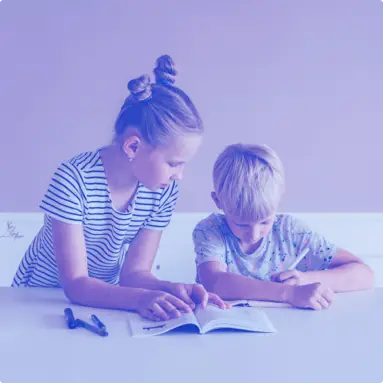
Episode 240: Qualities of Effective Teachers and Learning Environments
Andy and Robin this week are discussing their insights from visiting various schools and observing classrooms. They explore; some similarities among students and teachers, the importance of enthusiasm in learning, and the dynamics that create effective classroom environments.
More Podcasts on Education
Continue listening to our educational experts
This is The School of School podcast
Listen on Apple Podcasts, Spotify or wherever you find your podcasts.


Meet your instructors
The school of school podcast is presented by:

Andy Psarianos
Robin Potter
Never miss an episode
Subscribe to get the latest The School of School podcasts delivered to your inbox.
Podcast Transcription
Andy Psarianos
Blast off!
Robin Potter
Welcome back to another episode of the School of School podcast. I'm here with our exciting host, Andy and no Adam today. You miss him.
Andy Psarianos
No Adam today, no I know, he's doing whatever Adam's stuff.
Robin Potter
He's off in New Zealand doing New Zealand-Kiwi-Adam stuff.
Andy Psarianos
Is he in New Zealand?
Robin Potter
Well, you know, you can take the kiwi out of the New Zealander. Is that it?
Andy Psarianos
But you can take the New Zealand or out of the Kiwi? What's he doing in a Kiwi? Okay. We're not talking about Kiwis or talking about Adam. We don't care about Adam because he's not here.
Robin Potter
Haha. No, no, no, he's not here. Just us. So just before we push record, we were, we were chatting a little bit about schools that we visited and insights we've had but we never got to the insights, because then I pushed record because I thought, hey we might as well just talk about this, so yeah we've both been to a number... you especially, but I have too been to my share of schools to see see them in action.
Andy Psarianos
Yeah, observing lessons and whatever.
Robin Potter
Yeah, observe lessons, talking to the students, find out more about what it is they love about maths. And yeah, I just wondered, is there anything you can think of that has stood out in your mind from any of those classroom visits?
Andy Psarianos
Yeah, I think the most obvious thing when you visit schools, what you recognise is that kids are pretty much the same everywhere. And I know that there's always this idea like, those kids over there are blah, blah, blah, blah, whatever. It's like, yeah, it's different in that country, or it's different in, but it's, or private schools versus, it's not, it's not. Like the children are the same everywhere. It really, it's a myth that there's some differences, obviously, just cultural differences, but children are children no matter where you go. That's one of the biggest insights, I think, for me was that whether you go to a high performing nation or you go to just a regular school down the road or whatever, children pretty much behave the same way in every classroom.
Robin Potter
Yeah, agreed. I would say so. And the one thing I love about primary age or elementary school age kids is their enthusiasm. Their enthusiasm about everything. So you could be talking about the characters in our book to them, and they're telling you why they have a favourite, who it is. Or they could be explaining how they solved a math problem and be...
Andy Psarianos
Yeah.
Robin Potter
So excited about it and wanting to share that with you. Yeah, and you just wish that you could just capture that and keep it for everybody throughout their lifetime because I don't always see that later on in life. And I love to see how truly enthusiastic and joyful they are at that age.
Andy Psarianos
Tons of enthusiasm, yeah, tons.
Yeah, and the thing is by usually by the time they hit, you know, 12, 13, that all changes, right? It all changes. And then they become, I guess, much more self aware. And they're much more worried about how their peers see them or how they're, you know, are they cool or they whatever that, you know, and then they kind of get a lot more nervous, I guess, in general.
Robin Potter
Yeah.
Andy Psarianos
And start behaving differently and being really excited about school isn't as cool as it is when you're, let's say eight, you know? Yeah, yeah.
Robin Potter
Yeah, for sure. Now what about the teachers observing? Anything that you think stands out about teachers when you go into the classroom?
Andy Psarianos
Yeah, well, that's a good question. would say again, I guess what strikes me the most is how similar teachers actually are. It's easy to like try to pick out differences, but nowadays, for the most part, generally teachers are largely the same. Like they kind of do the same sort of stuff. You get different varied experiences. You get teachers that are better at classroom management than others. get, you know, teachers who are just only coming into their career versus teachers that have been doing it for a long time. But largely, you know, there's not a lot of difference between teachers either really, right? So it, and which is, which is kind of tells you a lot because if teachers aren't that different and students aren't that different why why is it that some some sometimes it works really really well and sometimes it doesn't that's a that's a good question that's something to look into i have my own ideas as to why that is but that could be a topic for another topic, another podcast, right? Yeah, so I guess overall what I would say is similarity. Like there's a lot more similar in classrooms around the world than there is different, you know, and it's interesting.
Robin Potter
Yes.
There's, I think part of it comes down to when you do see a teacher teaching and even though they're teaching the same material and perhaps as in with our program, they're teaching in a similar way. It's the dynamic of the class itself. So that teacher has a certain rapport with those pupils. And you can see that how it comes across in the entire dynamic of the classroom itself. So, and that's what I've noticed. Like sometimes, you know, the teacher apparently might dress up certain days and, you know, do something that the kids really find funny and they can relate to, or maybe the teacher has a knack for drawing and they draw certain characters and create these, their own numbered characters or something like it could be anything. But I do notice that I noticed that when the more kids are engaged, it's usually because they feel comfortable not only with their peers, but with that teacher and...
Andy Psarianos
Yeah, the whole environment is working. It's just really conducive to being open and collaborative and stuff.
Robin Potter
Yeah. Yeah. I think of my own kids. Yeah. When I talk to my kids about, know, what was your favourite year? And they look back, they always had a favorite teacher. And I've asked them about that. What was it about that teacher? And they can never quite express what it was, just that it was a really good classroom environment.
Andy Psarianos
Yeah.
Robin Potter
They felt encouraged to engage and speak and yet what that teacher did specifically, it's just kind of, it's just who they are or how they related to those students. So yeah, because it's the same material.
Andy Psarianos
Yeah. But also, yeah, well, you know, and also I think that, you know, it's, I guess, when you come in and you observe a lesson or you observe a classroom or whatever, you get only very kind of superficial idea about what's going on. When you spend a lot of time in the same classroom, because you're a pupil or a teacher, you know, you see a lot of things that the sort of visitors don't see, right? You know, because as a visitor, what are you going to see? It's like it's like visiting a country or going on holiday or whatever. You got a glimpse of what's going on. You really don't know, right? You know, the details and yeah, the nuances and stuff. Yeah.
Robin Potter
Right? No, no, no. They're usually trying to put their best foot forward too when you're there. So you don't always see the chaos going on when you're not. Yeah.
Andy Psarianos
Yeah
No, that's right. That's right. Well, what were some of the qualities of the teachers that you remember that stood out for you?
Robin Potter
Putting me on the spot... I think they still had that enthusiasm, enthusiasm for learning and for teaching, but also encouraging me to feel like I can do this and I'm good at this and I want to share my opinion. I want to put my hand up, which for some kids, that's a big deal. They don't ever want to put their hand up. And yeah, and then I did learn and I felt excited about the learning and thought, yeah, I'm good at this. want to keep learning more rather than just freezing up thinking, I'm terrible at this. I'm just going to sink into my desk here and stay quiet.
Andy Psarianos
Well, I think enthusiasm is contagious in the classroom, right? And if a teacher is really enthusiastic about what they're teaching, then that's going to be, you know, that's going to be a much better experience for everybody, right? And then what's going be more engaged. And also, like you said, it's very welcoming. It has to be welcoming, right? Can't be like, don't put your hand up because, you know, if you get it wrong or, you know, and it's all that kind of stuff, then you're not going to do it, right? You're going to cower in the corner.
Robin Potter
Yeah, and feeling like there isn't a dumb answer or a wrong answer, that it's just okay to just say what you're thinking and that you can approach your teacher and feel comfortable doing that. Yeah, makes all the difference.
Andy Psarianos
Yeah, yeah, absolutely. It's interesting because when I think back and, you know, was trying to reflect on some of my memories of going to elementary school and which teachers I liked and which I didn't. And I don't remember a lot of my elementary school teachers, if I'm honest, but I did sort of tend to rate them by discipline. It was kind of like, those are really strict, these ones are less strict. was kind of, that seemed to be a real kind of like an important factor in whether or not I liked to teach her, you know? Yeah. You know, and those really, go ahead.
Robin Potter
Do you think teachers are strict nowadays?
Andy Psarianos
Not in the way they were when we went to school. No, because I think, I think it, you know, I had some, I had some real prima donna teachers. And, you know, because culturally that was kind of accepted at the time, you know, and, you know, some teachers just really liked a really sort of quiet, you know, uneventful classroom, right? Everybody's sitting in rows and columns at their desks, just scratching away on a piece of paper was a good class, you know? In their minds, not in my mind. I was boring as could be, right? I hated, you know, those are the ones where you just kind of stood there and stared at the clock above the door, you know, wondering how long, you know, how long can 10 minutes actually be, right?
Robin Potter
Right. Yeah.
Andy Psarianos
Seemed to take forever some of those classes. Those were the worst classes, you know? And if you ever did anything wrong, stepped out of line, you know, you need to go to the bathroom and be like, no, you know, like what? You know? Yeah, like, like, you know, but, but also you would use that as like, got to get out of here, right? I got to get out of this class, go to the bathroom or just meander down the hall really slow and kind of look at stuff. You'd be gone for 15 minutes or whatever, right? Just wandering the hallways.
Robin Potter
Yeah.
Well, okay, that's a whole other topic of all the excuses kids use not to complete their work. So you've just touched on that. But I think the highlights here are that good teachers, good students, the dynamic between them and enthusiasm go a long way.
Andy Psarianos
Yeah, absolutely. There you go.
More Podcasts on Education
Continue listening to our educational experts
© Copyright 2025. The School of School.