


Episode 243: The Post-AI Handwriting Renaissance
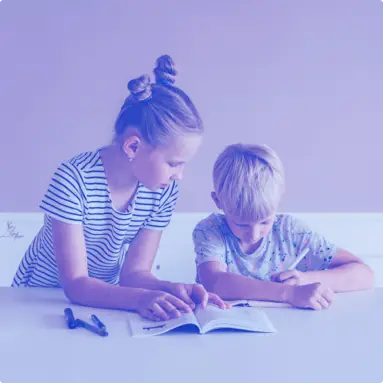
Our trio is back! This week, Adam, Andy, and Robin explore the presence handwriting in an ever-growing digital world. One of our earliest ever episodes was ‘Pen vs Pencil’, now is the debate ‘stylus vs. keyboard vs. paper’? Does writing open up new possibilities that digital tools don't? And does the act of writing down thoughts engages the brain differently? Our experts discuss!
More Podcasts on Education
Continue listening to our educational experts
This is The School of School podcast
Listen on Apple Podcasts, Spotify or wherever you find your podcasts.


Meet your instructors
The school of school podcast is presented by:

Adam Gifford

Andy Psarianos

Robin Potter
Never miss an episode
Subscribe to get the latest The School of School podcasts delivered to your inbox.
Podcast Transcription
Adam Gifford
Well, it feels like it's been a while, but we're back. It's a School of School podcast. Andy and Robin, lovely to see you both. How's things?
Andy Psarianos
Hey, things are good. Yeah.
Robin Potter
Yeah. Yeah, things are very good. Yeah.
Adam Gifford
Wonderful. Well, wonderful. Excellent. All is good. And the first topic that we're to talk about is something that's actually very dear to my heart and came up just for me just yesterday. But we're going to talk about a post AI sort of renaissance of handwriting. Where does it fit? Because it's so easy now, whether it's transcription, when you're saying something to your computer or device or whether you're just typing things in. It's so easy to generate text now digitally. So I guess just to open it up, the seat appears in some parts to be a renaissance with handwriting, putting pen or pencil to paper. Where does it sit with the two of you?
Andy Psarianos
You know, that's a great question. I, I, I mean, Robin, do you want to kick off? I, I, I have a lot of opinions on this, so.
Robin Potter
Well, sure. mean, what I was thinking was I was just at a conference in Ontario last week or week before. Anyway, it doesn't matter. The point is it was interesting to go to the different exhibitions, see the booths of people, you know, very familiar with a lot of those companies and just how it's changed, how it's morphing in the last even year of what they are presenting to people now and how they're presenting it. So we still have pencils at our booth and we still make people fill out their, write their emails, that kind of thing. I mean, we could be all techie, but we prefer it that way. There's a reason for it. But most booths do not have that. I mean, most are stylists, writing that kind of thing. And the conversations from that are exactly what you're talking about.
Andy Psarianos
Yeah.
Robin Potter
Adam, you know, is it almost like we're going back to the Stone Age if we have the kids using pencils and paper, lots of them are on Chromebooks and, you know, aren't using those small motor skills like they once did and.
I certainly see that there's still a place for it. And there was a lot of discussion about this at the conference from teachers just saying, know, some of us, want to go back to that, or we want to do a hybrid. We're concerned we're going all digital and all the kids are using now are stylus. So yeah, it's interesting times ahead.
Andy Psarianos
It's a big question because I don't think the processes are the same, right. And in learning, you know, I don't think using like, you know, tap, tap, tap, tap, whether it's like all fingers or two thumbs or one thumb or whatever it is, is the same as sitting down and scribbling and writing. Right. And I feel that scribbling and writing opens up kind of new possibilities that, you know, a keyboard doesn't or a mouse doesn't or even a stylus doesn't. There's a disconnect with a stylus, whether you're writing on glass, whether you're writing on some kind of like clever tablet or whatever it is, it just doesn't, it isn't the same experience as actually writing on paper. And I feel that the paper brings out a level of creativity.
And, you know, it's just not the same. But somehow paper and pencil are freer, or paper and pen are freer than anything digital. I feel like something digital is always, to me, feels a little bit formal and hard. And it isn't open to creativity in the same way.
Adam Gifford
Yeah, no, I completely agree and I think that process I think you've touched on something that I know for me is really important So I always have a pad and I write on it every day So it's I write the date then I write a to-do list and then I write ideas and those sorts of things and I think that physical act I was thinking about this was thinking just in the most like Fundamental rudimental level of writing a list and I know you can put a little like check mark and list that you write each day digitally No problem at all
But the act of writing something down, especially if you've written it down for three days straight and you think, and I've got to get onto this because I don't want to fit it. But that act of physically writing something, I'm sure is my brain is operating, doing something different. I can accentuate things by drawing on it, putting arrows to it, diagrammatically changing things. And it's not to say like and you've not said otherwise. Neither of you have said otherwise. There's certainly a place for digital. Whether it's polishing up your sort of the madness on the page or whether it's creating something and giving you the prompts and ideas. I think that people will be missing a trick if they don't have that physical interaction with pen and paper whether it's big bits whether it's whatever and that's the same for children because I think that you're right that there can be I think if it was digital only kind of staleness to it or something that it makes it harder it doesn't have the same sort of impact and I don't think that the creative process is as rich unless we've done something physical which in this instance writing things down you know.
Andy Psarianos
Well, it's constraints, right? So the digital platforms always have very rigid constraints. Like if you're typing into a document, you know, everything is perfectly horizontal. It has a set width. It's like, this is how it works. You're using a particular typeface. You know, you have some flexibility about, know, whether it's justified on this side or that side or both sides or whatever, but, really there are a lot of constraints. So you're working with.
in a like a box, right? While a piece of paper is free. It's kind of like you want to write upside down, you want to write backwards, hey, go for it, you know, you want to draw like if you're typing something into a some kind of word processing document and all of a sudden you feel like it would be appropriate to have like a little sketch in there. That's really hard, right? There's no meant for that. But in your paper, you can sketch a little whatever because it makes sense. Make a little diagram where you can't do that easily digitally. Okay, so then you get to the stylus with the tablet, but even that has constraints and they're different constraints and it's never.
I don't know, there's something about writing on a piece of glass that's just, even if you put screen covers, it's just not the same, right? Your stylus is here and the thing you're writing, there's a distance between...
Robin Potter
It's not the same. No.
Andy Psarianos
where your stylus is and where the image and there's like the parallax factor, right? Like you look at, it's like looking through water. You know what I mean? It's like, you know, if you put a stick in water, does this, you know, it's, it's that kind of stuff. It bends, right? It's all those things and they interfere with the process. Somehow they, it's less intimate. And I also like, I just like the feeling of a piece of, a piece of, of, of, you know, textured non-coated paper and a pencil and that kind of little little bit of scratchiness a little bit of feedback you can press harder lighter you can you know shade or whatever it is and it it's just so
Robin Potter
Yeah.
But the three of us are from that generation too, Andy. I think it is very important. mean, listen to Adam, he writes every day. He's putting something down in his notes every day. As do I, often when we're having a meeting, I'm sitting there taking, I'm just writing out some notes for myself. I mean, I could put it on the computer. So one question would be, what would a 10 year old... say about our conversation or what would a seven-year-old I mean they can't can they relate to that same feeling of pen to paper pencil to paper or is it also partly because this is something we are so familiar with because this is how we grew up will they feel differently about that I don't know...
Andy Psarianos
I think that it's probably less important to them than it is to us in the sense that digital devices are not novel to 10 year olds, right? Like they're so ubiquitous, they're everywhere that I don't think for them that it's like, it's not like when the iPads or iPhones first came out, you know, and it was like all the kids wanted to just, they just wanted to experience this thing because it was new, right? Now it's like, it's not new. It's just, it's no more exciting than a piece of paper for them. So I think that they're less worried about, and they're more likely to choose whatever makes more sense based on convenience versus like new factor, right? Do you understand what I'm saying? Like it's just, they're both just different technologies for them.
Adam Gifford
I do wonder as well, I think that in a classroom, my only concern would be, because I think children will still be writing every day in classrooms, in most places in the world I suspect they're writing, but it's whether or not there's that link to creativity. So you know, a really big thing, or you hear far more about it, it's related to mental health, with people journaling their ideas.
But that idea of having flexibility and freedom and creativity in what they write. So my worry is, that children are going to be, just as you said, Andy, like digital divisive. That's just part of them. That's just part of society. just the norm. Then you've got writing in school that tends to be quite constrained. So today we're going to be writing in paragraphs and this is what it's going to look like. And so you can't just write some madcap sort of, you know, diagrammatic, blah, blah, blah, blah, blah, blah. These are my ideas first. In schools that do things like journaling where it is a free flow of ideas, the positive part is I can see this child's thinking. But not just the teacher, so can the child. And I think that the part about writing on paper is its permanence. So the reason why I say it was a personal thing at the beginning of this podcast is because when I was last out in New Zealand with family, I said, do you know what I really miss is getting letters? I really miss getting a letter. And I received a letter, yeah, I received a letter yesterday off the back of that. And part of what they wrote down, said, I need to really think about what I'm about to write, because there is no spell check, there is no this. And so you kind of, it's almost part of its stream of consciousness stuff, you know? We have to go back in and go, you know when I said this, what I really meant was, da-da-da-da-da-da-da. And there's something about that process that I think is really, really important. And I think that...That space for creativity and knowing that it's a really nice medium to kind of free flow ideas and those sorts of things. I think the value of that in schools is huge. And the part that's probably closest to us that we've experienced is the journaling bit. You know, as I said, not just so teachers can see thinking, but the children can see their own thinking and reflect back on it. Because you can look back on flip back and go two months ago what was I thinking about this and I can literally open it up and do it. Whereas what do I do if I've done that on a computer or a device where are you going to find it? It's like a nightmare man, too hard.
Andy Psarianos
There you go.
Robin Potter
We've solved it.
More Podcasts on Education
Continue listening to our educational experts
© Copyright 2025. The School of School.